
This post contains affiliate links, so we may earn a small commission when you make a purchase through links on our site at no additional cost to you.
Known as the pagan Thanksgiving, Mabon marks the Autumn Equinox, a time of balance and harmony when day and night are equal. For those who celebrate, Mabon is the second harvest celebration in the Wheel of the Year, with Lughnasadh being the first. The ancient pagan festival typically falls around 23rd September (Northern Hemisphere), signifying the time when farmers traditionally gathered hearty foods like gourds, pumpkins, grapes, and apples.
Mabon offers a cornucopia of food, making it a holiday of gratitude for the harvest’s abundance, our communities and families as we prepare for the darker months ahead. It is time to give thanks for the abundance of Mother Earth, both literally and spiritually. It’s also an opportunity to reflect on the Wheel of the Year, recognising your successes and letting go of the things that did not serve you during the past twelve months.
In this post, we will delve into the history of Mabon, explores its symbols and share ways to celebrate this meaningful holiday. Finally, for those love readers who make it to the end of the article, I have shared with you my own Apple Pie recipe to enjoy for Mabon!
A History of Mabon
Many cultures celebrate some kind of harvest festival near the Autumn equinox. There’s Oktoberfest in Germany, Mid-Autumn Festival in China, Mehregan in Iran, and even American Thanksgiving. Modern Pagans began celebrating Mabon as the last of the eight Sabbats (the practice was begun by Wiccan author Aiden A. Kelly in the 1970s), but its roots as a harvest festival go back to ancient times. Evidence of it being a pagan celebration originating from the ancient Celts, who populated Britain and much of Northwest Europe (so we’re going back nearly 2,000 years here).

Mabon is believed to be derived from a medieval Welsh myth, the Mabinogion, a collection of 14th-century stories written in Middle Welsh. The story of the ancient Welsh hero named Mabon ap Modron, which means Son of Mother. Often compared with Apollo, the figure of Mabon was depicted as a handsome youth with a lyre. Or in British folklore, Mabon is associated with Herne the Hunter and the start of deer-hunting season. The tale of Mabon ap Modron revolves around his birth, captivity, and eventual liberation with the help of animals like the Stag, Blackbird, Owl, Eagle, and Salmon.
Modron is a shadowy figure, and all we are told is that she gave birth to her son Mabon, but when he was three days old he was taken from “between her and the wall”, i.e. the underworld, drawing parallels with the story of Persephone and Demeter. And as discussed in our previous article, Demeter is much closely associated with the Autumn harvest, as it was her grief at losing her daughter that turned the earth from lush abundance to barren cold. Mabon’s time in the underworld kept him eternally young, and he became associated with figures like Dionysos, Osiris, and John Barleycorn.
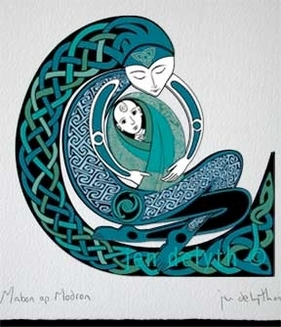
The bay tree is sacred to Mabon, symbolizing preservation—a vital aspect of harvest activities. Mabon was found and rescued by King Arthur as part of the fulfillment of a quest. You can read this tale, which is part of the longer story of Culhwch and Olwen in the Mabinogion. If you find it rather heavy going, you might prefer this gentle re-telling by Alison Lilly: The Tale of Mabon.
Symbols of Mabon
Mabon is rich in symbolism, with harvest fruits and vegetables adorning altars alongside the autumn colors of gold, orange, red, bronze, and rust. The Cornucopia, known as the “horn of plenty,” symbolizes a bountiful harvest, reflecting both male and female characteristics. Its origin story, involving Zeus who as an infant had to be hidden from his devouring father Cronus.
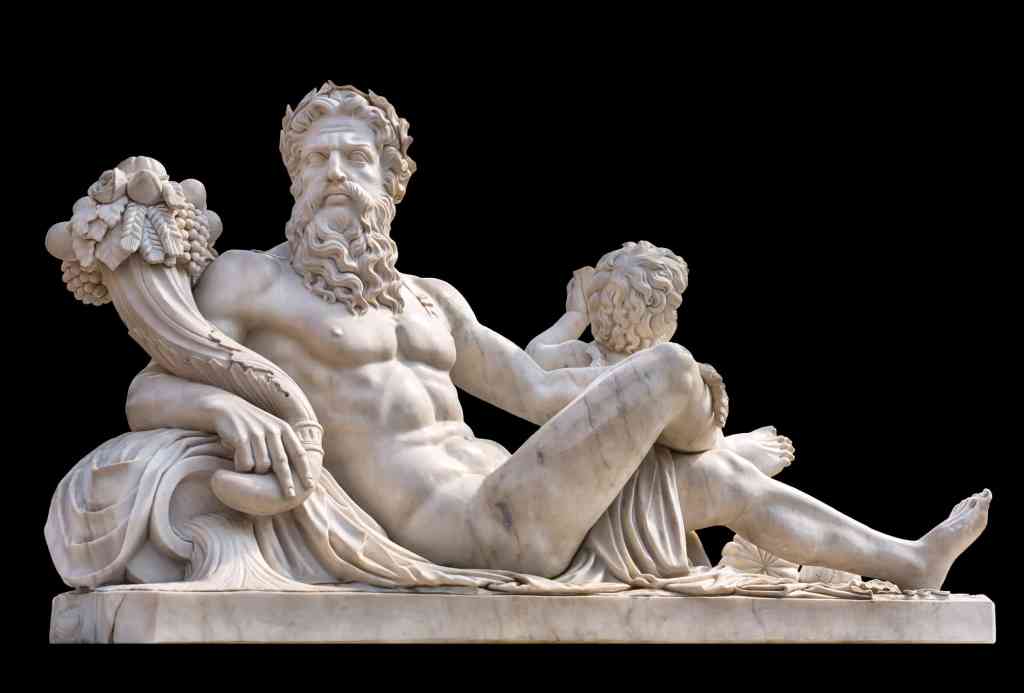
In a cave on Mount Ida, Crete, Zeus was cared for and protected by a group of nymphs and a goat Amaltheia (“Nourishing Goddess”), who fed him with her milk. The suckling Zeus had unusual abilities and strength, and in playing with his nursemaid accidentally broke off one of her horns, which then had the divine power to provide unending nourishment, as the foster mother had to the god.
Apples hold a special place in Mabon symbolism. Often associated with the forbidden fruit from the Garden of Eden, apples have diverse mythological and folkloric connections to knowledge and enlightenment. In the Arthurian tales, Merlin gains powers of prophecy in an apple tree grove, while Isaac Newton discovers gravity under an apple tree.
Wassailing, a tradition involving spiced ale or cider, songs, and toasts, was practiced to ensure a good harvest. However, apples left hanging on trees during or after winter foretold death, underscoring their importance as winter sustenance.
How to Celebrate Mabon
At its core, Mabon is all about gratitude for what has been reaped this year, with an eye to the hardships of winter. It also brings a recognition of a mental and physical adjustment needed for the darker, longer nights and harder conditions ahead. Here are a few ways to celebrate.
1. Eat all the apples
This five-pointed star (Aphrodite’s star) at the centre of an apple has also been interpreted as a pentagram, making it a popular fruit with modern day pagans and wiccans. Today, we don’t have to worry about bad harvests, or relying on apples for sustenance during the winter; apples can be used for many things, from baking, to decoration. Slices of apples can be cooked and dried to create hanging ornaments, or the cross-section of an apple can be used for printing, revealing that hidden star within.
2. Reflect on the year and set intentions
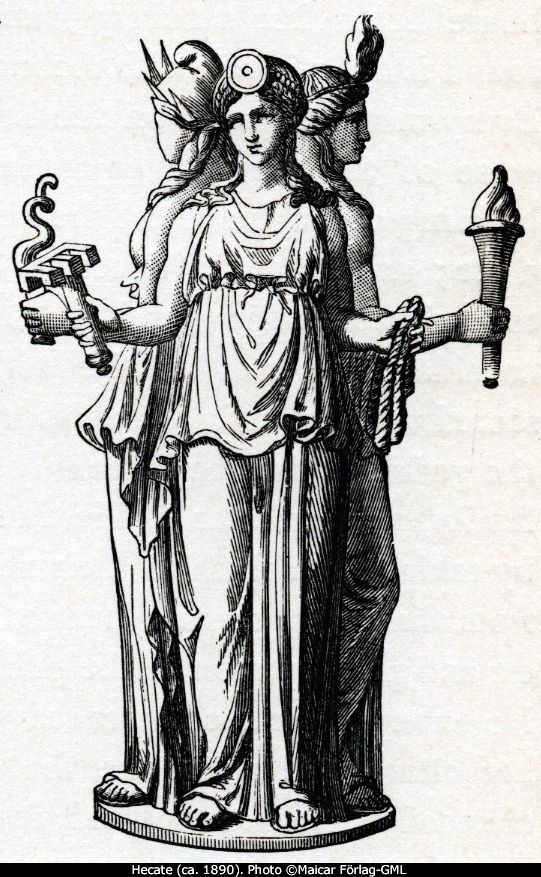
I decide to take the opportunity to set some intentions this weekend. With the changing of the seasons and the decreasing light, I often need to shift my perspective and begin my hibernation. Whilst I journalled, I considered the Dark Mother archetype which speaks to our shadow side – the parts of ourselves we do not always like to recognise. Honoring the Dark Mother, the embodiment of the Crone, honors the necessity of both light and darkness in the cycles of life. By recognizing and celebrating the archetype of the Dark Mother, we deepen our connection to the full spectrum of the Goddess and embrace the beauty and lessons found in the darkness.
3. Declutter
Like spring, Mabon is a great time to clean up at home. After all, you’re probably going to be spending more time here over fall and winter. Finish any lingering projects and clear out emotional and physical clutter so that your home feels calm, relaxing, and peaceful. For me this involved cleaning the house and finishing off with a much need sage cleanse.
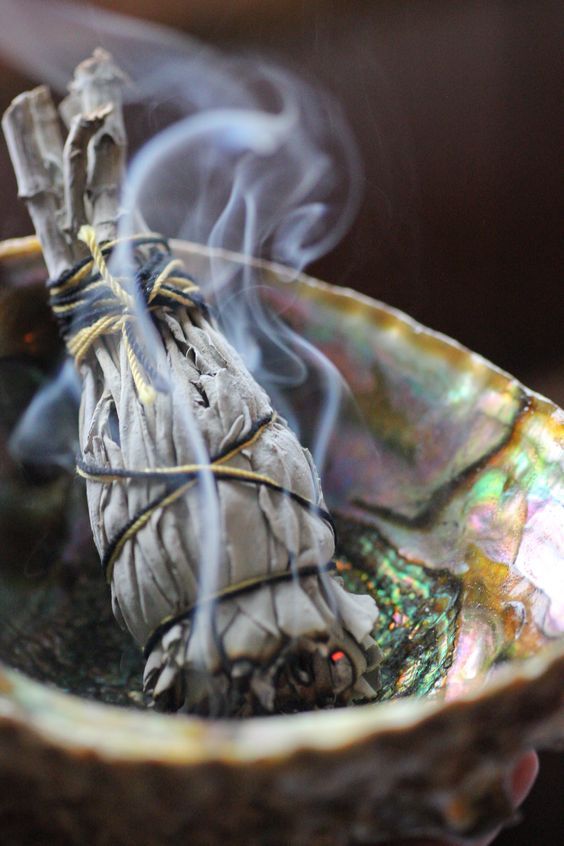
4. Celebrate
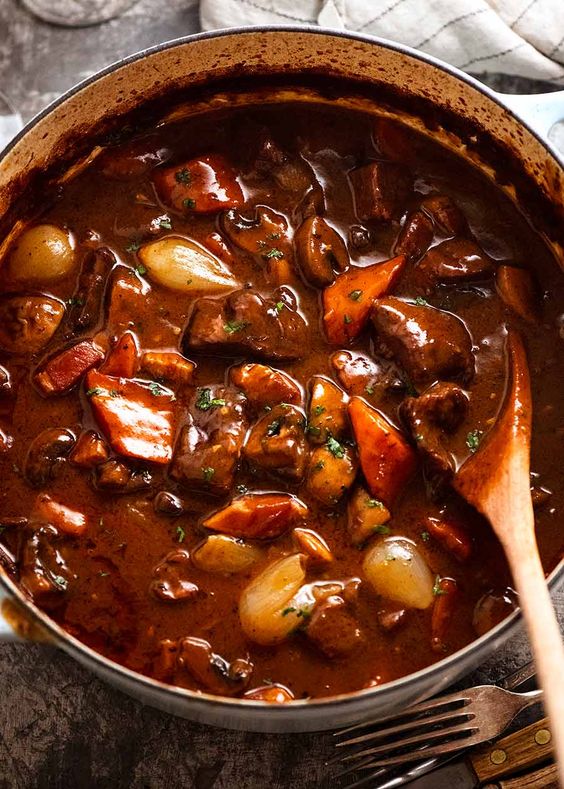
This weekend I prepared a Mabon harvest dinner. I loved creating a cosy and warm space for my family with a table of seasonal vegetables and comforting apple pie (see recipe below).
How to set up your Altar
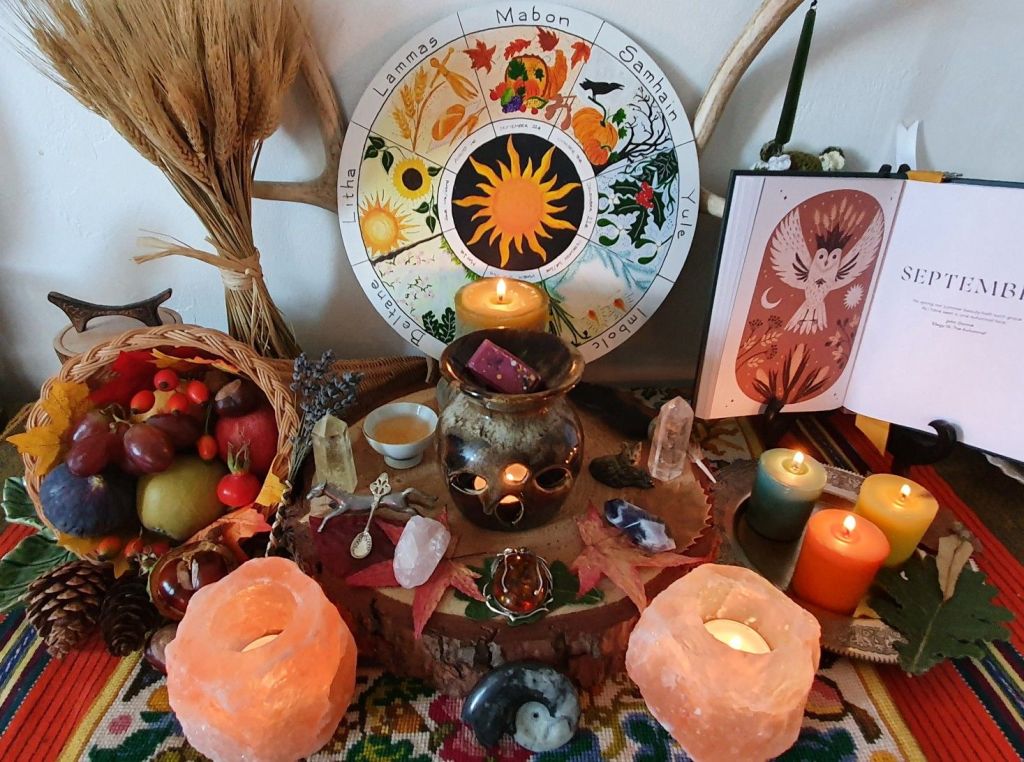
There are many symbolic items you can use to create a Mabon altar, table centerpiece, wreath, or piece of art to adorn your home and bring in the positive energy of this festival. I like to focus on items that are locally found or that hold some resonance to me personally, for instance, I tend to go apple picking at my grandparents orchard and these beauties will always feature in my Mabon altar and celebrations.
You can personalize your own Mabon creation to represent what you enjoy most about this season. Here are some ideas to get you started:
- Plants: Cornucopia, pinecones, seeds, autumnal leaves
- Colors (for candles, altar cloths, or paper): Orange, red, yellow, brown, copper, dark yellow, dark green
- Herbs: Yarrow, rosemary, sage, mugwort, rosehips, cinnamon
- Foods: Corn, beans, squash, apples, pumpkins, cider, root vegetables, pomegranate, wine
- Flowers: Sunflowers, thistle, marigolds
- Animals (use pictures, sculptures, or maybe a feather): Owl, stag, blackbird, salmon
A Mabon altar is a personal reflection of your connection to the season and the spirit of thanksgiving. Allow your creativity to guide you, and infuse the space with your own unique energy and intentions. Your Mabon altar is a space to celebrate the abundance of the harvest and find moments of peace and balance.
Crystals for Mabon
Invite these powerful crystals into your Mabon celebrations with the The Psychic Tree who are offering you 20% off everything when you use the code AUTUMN20. Place them on your Mabon altar, carry them in your pocket, or meditate with them. Allow their energies to resonate with your intentions. Embrace the transformative magic of Mabon with the wisdom of Earth’s precious gemstones.
Amber: has a strong connection to the earth and is a powerful healing and cleansing stone. It has the ability to absorb negative energy and transform it into positive. Amber brings stability to life and brings us the motivation to strive for what we want to achieve.

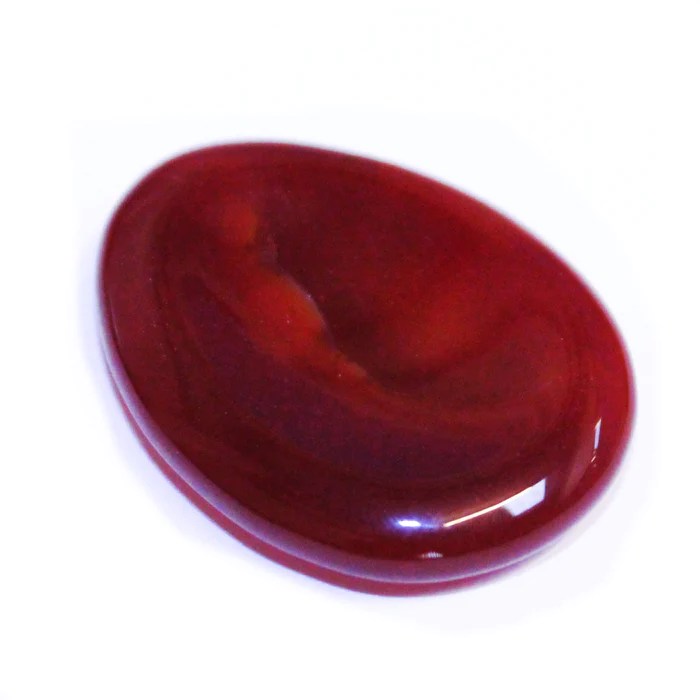
Carnelian: known as the stone of creativity and motivation, Carnelian resonates harmoniously with Mabon’s theme of abundance. Its warm, earthy tones encourage us to embrace the changing seasons with renewed enthusiasm.
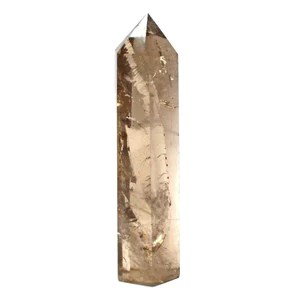
Smoky Quartz: offers its protective and grounding properties to help us navigate through the darkness with courage and resilience. Use this crystal to release negative energies and find strength in times of change.
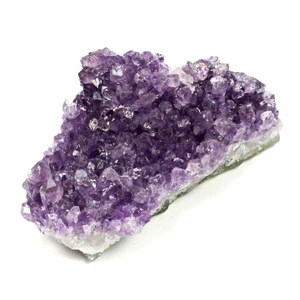
Amethyst: is a valuable ally for enhancing your connection to spirit. Its calming energy encourages inner reflection and aligns us with the rhythms of the natural world.
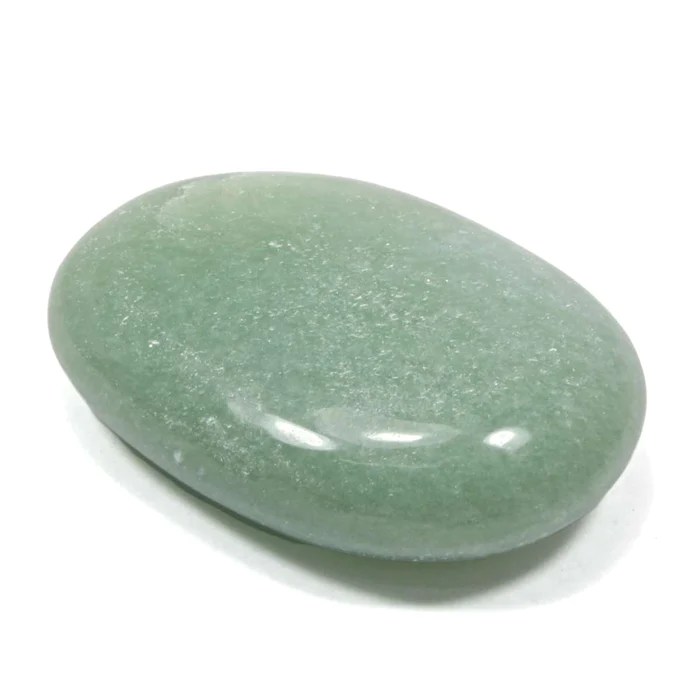
Green Aventurine: aligns effortlessly with the essence of Mabon. This heart-centered crystal invites growth, prosperity, and emotional healing, serving as a gentle reminder of the ever-turning cycles of life.
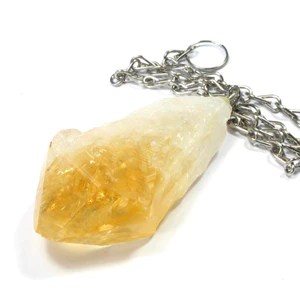
Citrine: Often referred to as the “Merchant’s Stone,” Citrine carries the energies of prosperity and manifestation. Utilize this vibrant crystal during Mabon to attract abundance and your amplify intentions,.
Conclusion – Mabon Blessings
Mabon is a time of gratitude, reflection, and celebration of the harvest’s abundance. Its rich history, symbolism, and rituals provide an opportunity to connect with nature’s cycles and prepare for the challenges of the coming winter. Whether you choose to enjoy apples, set intentions, declutter your space, or create a Mabon altar, may this holiday bring balance, harmony, and a sense of renewal to your life.
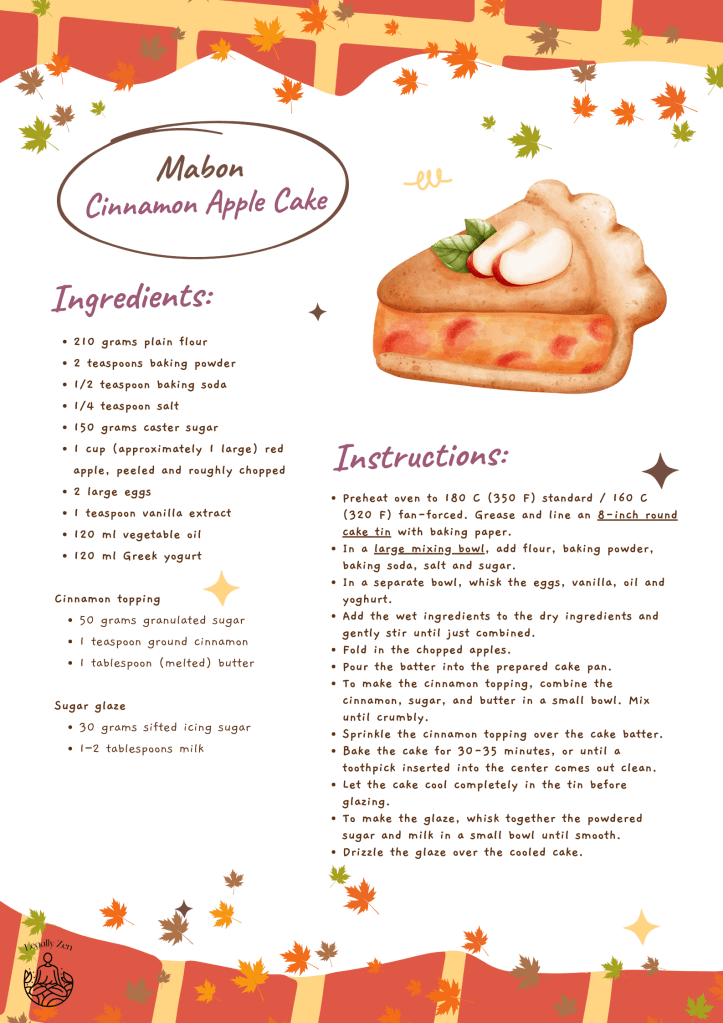
Thank you so much for reading – please find my delicious Cinnamon Apple Cake recipe below – Happy Mabon!
Resources
Celebrate the Earth: A Year of Holidays in the Pagan Tradition. By Laurie Cabot and Jean Mills
Plant Lore and Legend, by Ruth Binney
‘Mabon’, by Goddess and Green Man – brilliant for an overview of Mabon customs and symbols, including a great Somerset Apple Cake recipe!
‘Apple History, Folklore, Myth and Magic’, by The Practical Herbalist – a medley of different facts about apple lore
‘Apple – healing, youthfulness, rebirth’, by Ireland Calling – interesting Celtic folktales around apples, and the history of apples in the British Isles
‘Sacred Tree Profile: Apple’s Medicine, Magic, Mythology, and Meanings’, by The Druid’s Garden – a really thorough look into the beliefs surrounding apples
‘Apple – Quert’, by Ogham Divination – a really lovely insight into the druidic alphabet ogham, and the meanings of apples
‘Scandinavian Tree Lore: Apple Trees and The Goddess Idunn’, by Folklore Fun – more about Iðunn and Norse belief
‘Apple Mythology: Folklore and Seasonal Traditions’, by Iris Brooks – another medley of interesting apple facts
The Origins and Practices of Mabon by Dhruti Bhagata
The Welsh Witch Podcast – Mabon: Pagan Festival, or Welsh Deity? With Kris Hughes

 Legally Zen