
This post contains affiliate links, so we may earn a small commission when you make a purchase through links on our site at no additional cost to you.
In the boundless tapestry of human belief and imagination, the divine feminine radiates like a constellation of wisdom and power. These celestial beings, goddesses from diverse mythologies, illuminate the universality of the feminine essence. I have am fascinated by the figures of polytheism, and it is no wonder with these fascinating and enduring narratives being prominent in the Western imagination. However, these stories leave out many of the world’s most compelling mythologies, encourage the damaging myth of White Eurocentrism in the Classical sphere and often privilege the accomplishments and powers of male deities over their female counterparts. In this exploration, we embark on a journey through the stories, attributes, and cultural significance of goddesses from various mythological pantheons, uniting the world under the banner of the divine feminine.
Amaterasu or Amaterasu-ōmikami (Shinto Faith)
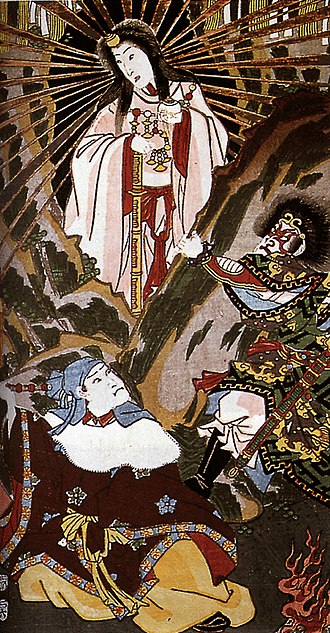
Amaterasu is one of the major deities in the animistic Shinto religion of Japan; her full name means “Great Divinity Illuminating Heaven” or “Shines from Heaven” (what a name!) One of the world’s few female solar deities, a principal myth featuring Amaterasu depicts her conflict with her brother, Susanoo, god of storms and the sea. Angered by Susanoo because he threw a flayed horse into her weaving hall (rude),
Amaterasu withdrew to a cave and brought an age of darkness upon the world. After eventually leaving the cave following reflection, she banished Sasanoo from heaven. As a gesture of reconciliation, he gifted her the legendary sword Ama-no-Murakumo-no-Tsurugi (天叢雲剣, “Sword of the Gathering Clouds of Heaven”). Interestingly, we can see this sword crystalising in present day with the discovery of the Amaterasu particle demonstrating the power of the goddess of the rising sun.
Anath / Anat (Ugaritic/Ancient Semitic Mythology)
This ancient Canaanite goddess of love and war is definitely someone I would want on my side. Anath (Anat) is a prominent figure in the Canaanite mythological texts, dating to c. 1400 BCE, discovered at Ugarit on the Syrian coast. Sister or consort of the storm god Ba’al, the warrior Anath was famed for her ferocity in battle. She was considered to be the mother of the gods, but was also known as “the Virgin”. She was sometimes known as “the Wanton” (because of her lust for sex and war), the Fairest daughter-sister of Baal, “the Lady”, “the Destroyer”, “Strength of Life”, and “the Lady of the Mountain”.
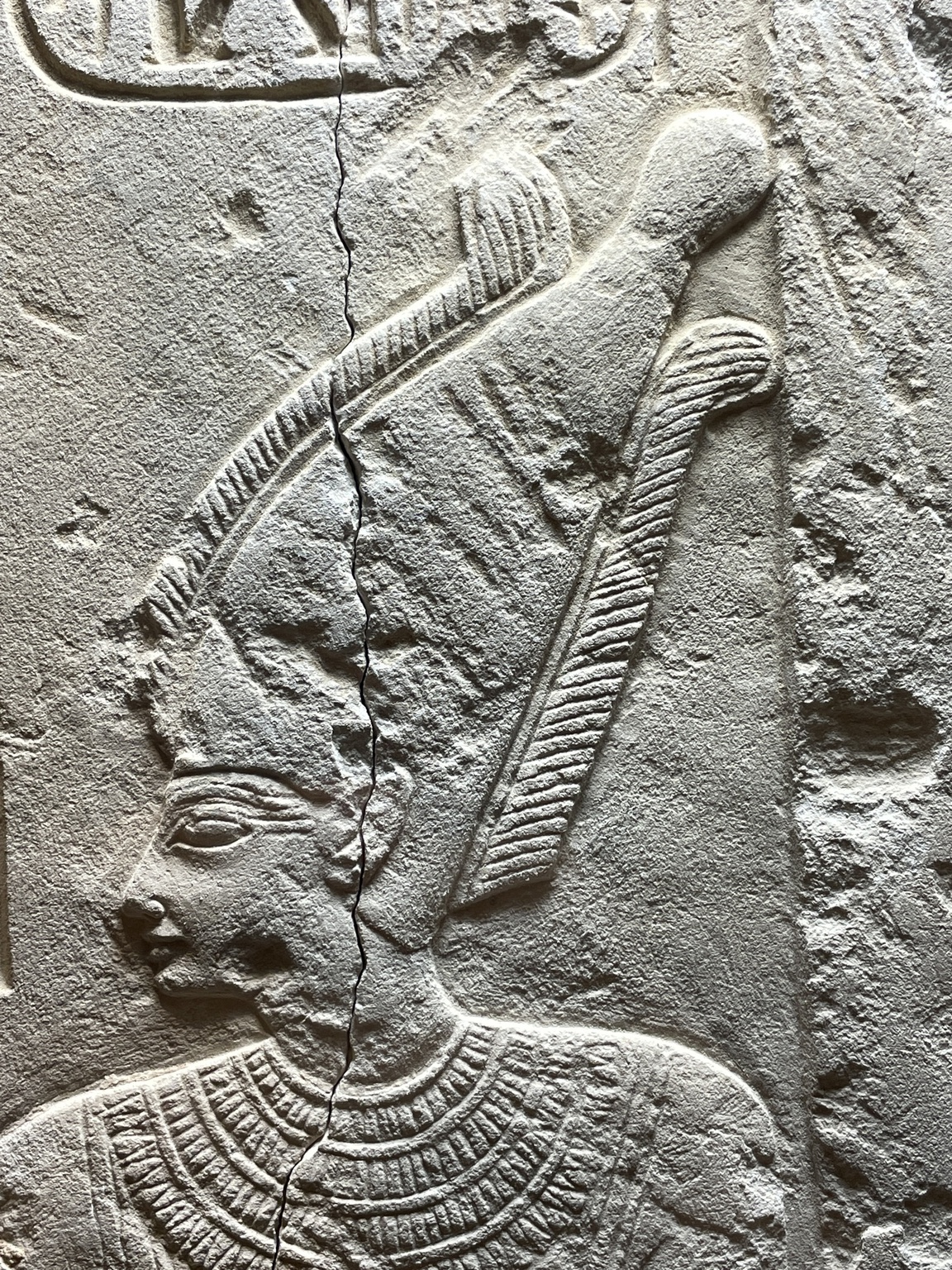
The cuniform texts describe her as an aggressive and ruthless goddess who destroys the enemies of Baal and wades through pools of their blood. She even hunts down and kills Mot (death) when he slays Baal. However, she also had a more gentle side. As a goddess of sexuality she was considered to be the most beautiful of all of the gods, and as a fertility goddess she protected the people, animals and the crops. From the little I know of Anath, she seems to embrace the passionate side of the divine feminine.
She was the mother of Shamgar, who freed the Hebrews from Philistine oppression by orchestrating an uprising. An ancient Ugaritic text describes Anat’s revenge against a man who slighted her in no uncertain terms:”Anat seized Mot, the divine son,/With a sickle she cut him,/with a winnow she winnows him,/with fire she scorches him,/with a mill she crushes him,/she scatters his flesh in the field to be eaten by birds.
Aphrodite – Greek Goddess of Love and Beauty
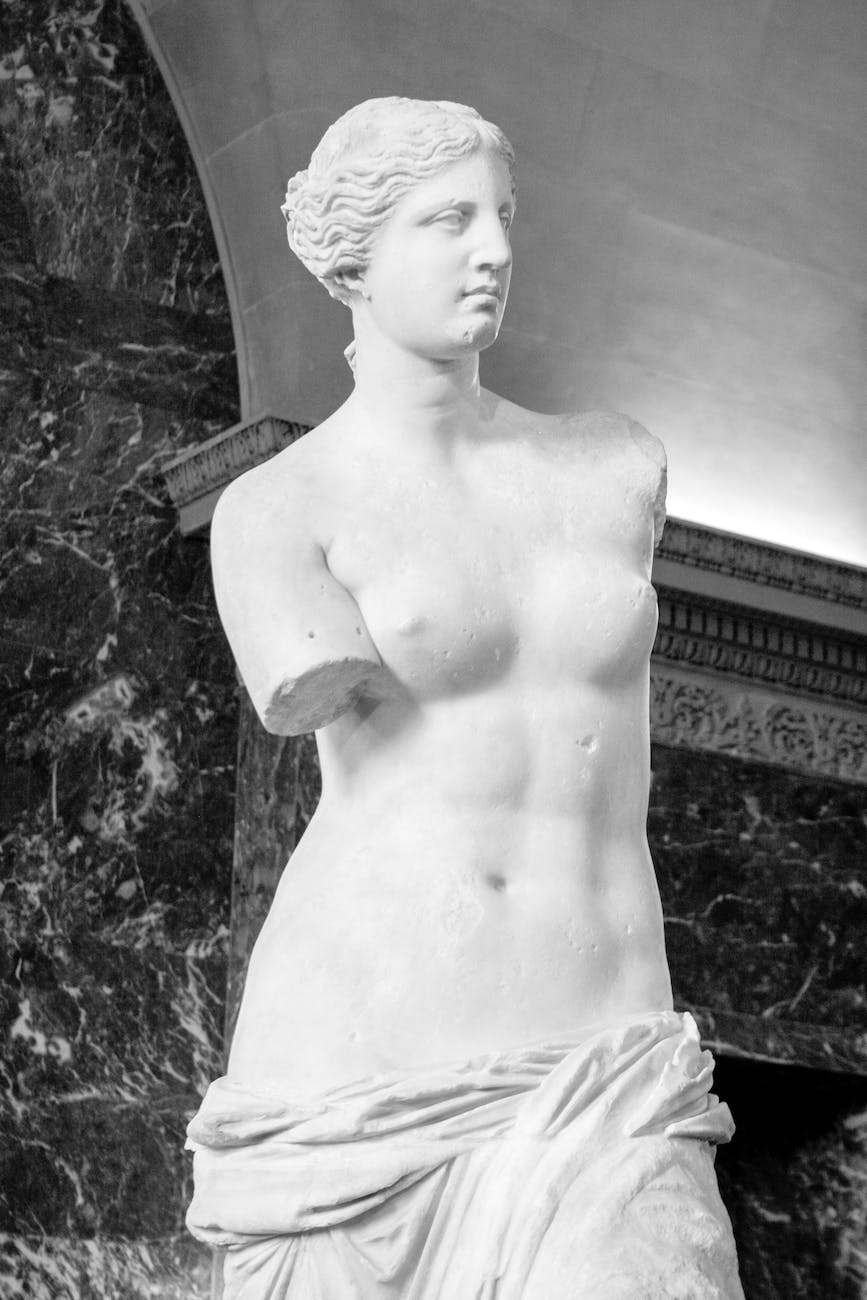
In the Greek pantheon, Aphrodite reigns as the embodiment of love, beauty, and desire. Born from the sea’s foam, she radiates an irresistible allure as depicted in the Venus de Milo. The Olympian’s story reminds us that the divine feminine celebrates sensuality and the magnetic energy of connection and love. In Roman mythology, Venus shares her essence with Aphrodite, representing love, beauty, and desire. Her story echoes her Greek counterpart, underscoring the universality of these timeless feminine qualities.
As the symbol of all desire and longing, Aphrodite exerted an immense influence on mortal affairs. Perhaps most notably, she played a key role in provoking the Trojan War. According to this myth, Aphrodite became embroiled in a beauty contest with her fellow goddesses Hera and Athena. Each of the three goddesses claimed that she was the most beautiful and therefore deserved to win a golden apple inscribed with the words “to the fairest.”
The gods chose the young Trojan prince Paris (Orlando Bloom in Troy) to be the judge of this contest. Each of the three goddesses tried to bribe Paris, but in the end it was Aphrodite who won him over by promising him the most beautiful woman in the world as his bride. After Paris chose in Aphrodite’s favor, she kept her promise and caused Helen of Sparta, the most beautiful woman in the world, to fall in love with Paris. But when the two lovers ran off, Helen’s husband Menelaus raised an army and sailed to Troy to retrieve his wife—thus sparking the Trojan War.
This catalyst of a goddess archetype teaches us to worship our divine feminine energy within and see our bodies as sacred temples of divine creation and provides us with a helpful reminder that the divine feminine energy can have a powerful effect when used unwisely.
Athena – Greek Goddess of War, Wisdom and Handicrafts.
Athena, the renowned Greek Goddess of War, Wisdom, and Handicrafts, stands as a prominent figure in classical mythology. Her influence extends far beyond ancient tales, becoming a Western symbol synonymous with knowledge, strategy, and even democracy. Legend has it that the great city of Athens owes its name to her. Born from her father Zeus’ forehead, she emerged fully armed after Zeus consumed her mother Metis.
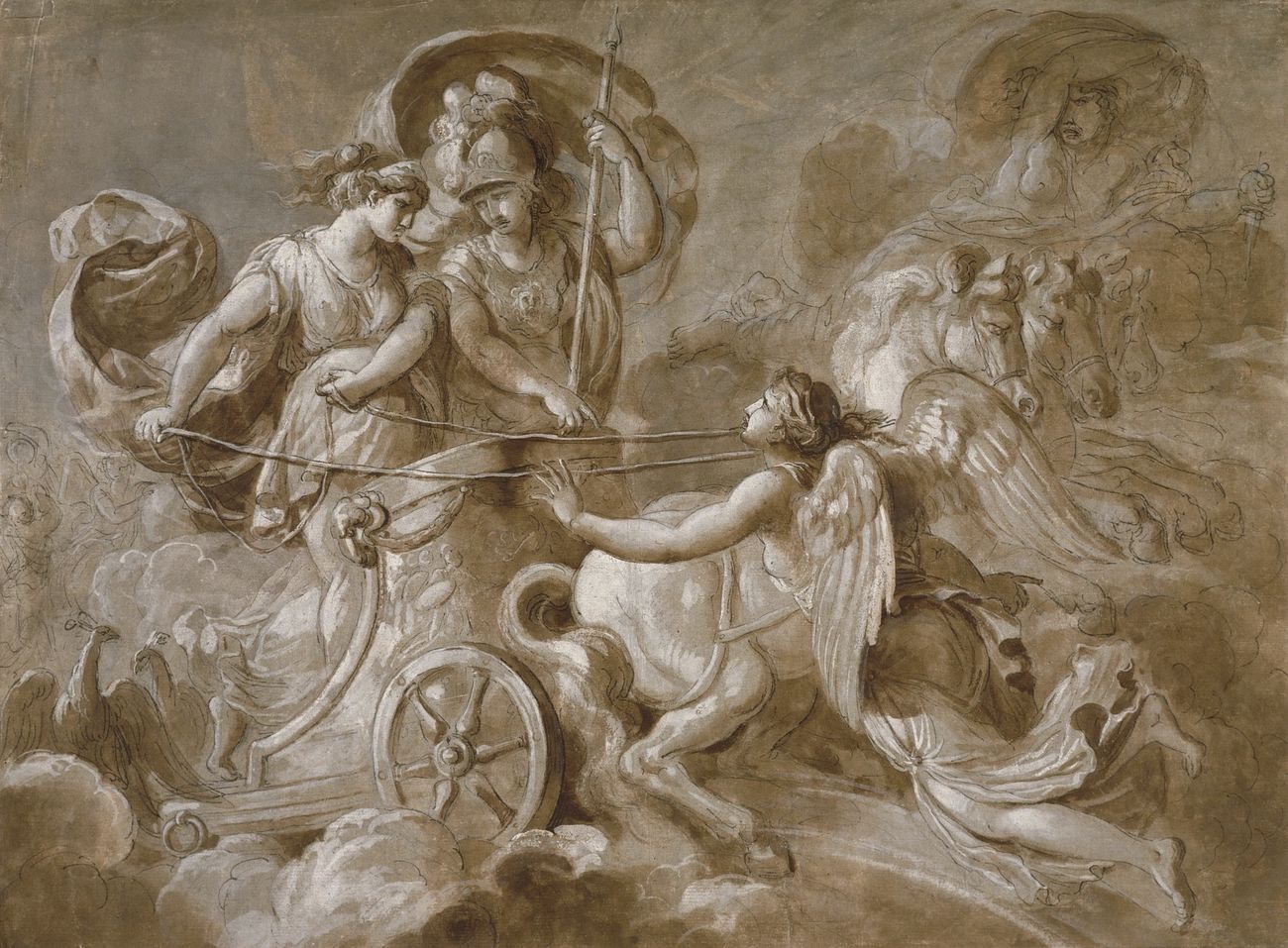
Athena’s victory over Poseidon secured her position as the patroness of Cecrops’ ancient city, chosen for her gift of the olive, which the residents preferred over Poseidon’s offer of military dominance. This city would eventually become known as Athens. These tales exemplify the goddess’ focus and foresight, embodied in matters of the intellect. Athena served as a mentor and strategist to both humans and immortals. Revered as the Goddess of Craftsmanship, she presided over spinning, weaving, agriculture, carpentry, metalworking, and pottery. Credited with inventing the plow and rake, she also fostered the development of philosophy, poetry, and oratory.
Athena guided Perseus in his quest to confront the dreaded Medusa without succumbing to her petrifying gaze. Among the Greek heroes, Odysseus stood as her favored champion, renowned for his intellect. However, Seeling’s article presents a compelling argument. It delves into Athena’s controversial act of transforming the young maiden Medusa into a monstrous figure as punishment for the “crime” of being raped in her temple. This deed is seen as an outcome stemming from the goddess’ unresolved early conflicts or the “the Oedipus complex in the female”.
Despite her green streak, Athena is a goddess that I frequently connect with her as she serves as a guide in my career and when making complex decisions. I call upon her strength in tough times and I give her thanks in my victories.
Baba Yaga – Slavic Wild Old Woman
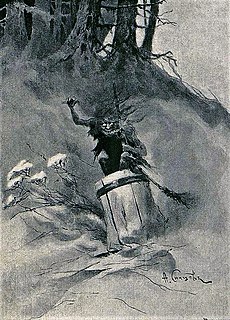
Baba Yaga’s legacy originates from various Eastern European cultural narratives, each offering a distinct portrayal of her character. However, across these tales, a consistent theme emerges—emphasising the importance of a pure spirit and respectful demeanor. Approach Baba Yaga correctly, and she becomes a source of guidance; yet, without proper preparation, sincerity, and due respect, she poses a significant danger. Too many or the wrong questions can provoke her ire. Success in an encounter with her hinges on maintaining a pure heart, showing respect as one would to an elder, and caring for her creatures.
Traditionally depicted as an ogress who abducts, cooks, and consumes her victims—often children—Baba Yaga is also a guardian of the fountains of the water of life. She resides in a forest hut supported by birds’ legs and surrounds her dwelling with a fence adorned with human skulls. Her mystical abilities allow her to traverse the skies, riding in an iron kettle or a mortar, causing tempests in her wake. She’s even said to accompany Death, consuming the souls newly released into the world.
I would suggest that if you are interested in working with Baba Yaga then listen to Madame Pamita’s episode of Between the Worlds Podcast.
Durga – Hindu Warrior Goddess
Within the rich tapestry of Hindu mythology, Durga emerges as a formidable warrior goddess, renowned for vanquishing malevolent forces. She embodies the indomitable spirit of the divine feminine, illuminating that strength, courage, and the determination to safeguard what we cherish are intrinsic facets of femininity. Durga’s creation is steeped in a divine purpose—to annihilate the buffalo demon Mahishasura—an adversary unconquerable by Brahma, Vishnu, Shiva, and the lesser gods. Infused with their combined energies (shakti), she emanates from the male divinities yet stands as their true source of inner power, surpassing them in greatness.
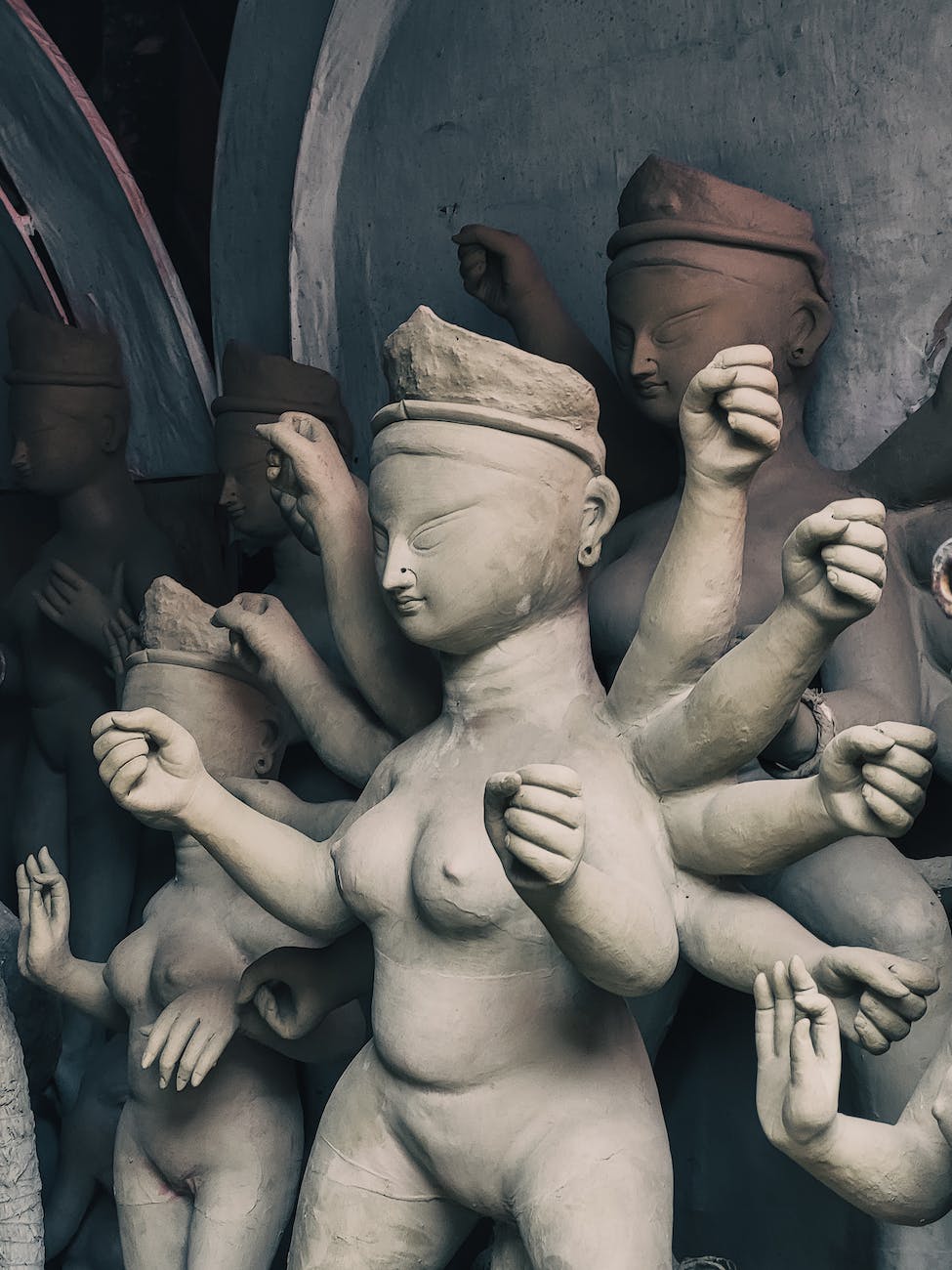
Manifested fully grown and strikingly beautiful, Durga assumes a fearsome countenance in confronting her adversaries. Often depicted astride a lion, she possesses either eight or ten arms, each wielding a weapon bestowed upon her by various gods to combat the buffalo demon. The annual celebration of Durga Puja in northeastern India stands as a grand festival in her honor, underscoring her significance in Hindu mythology and culture.
Frigg – The Norse Queen of the Aesir
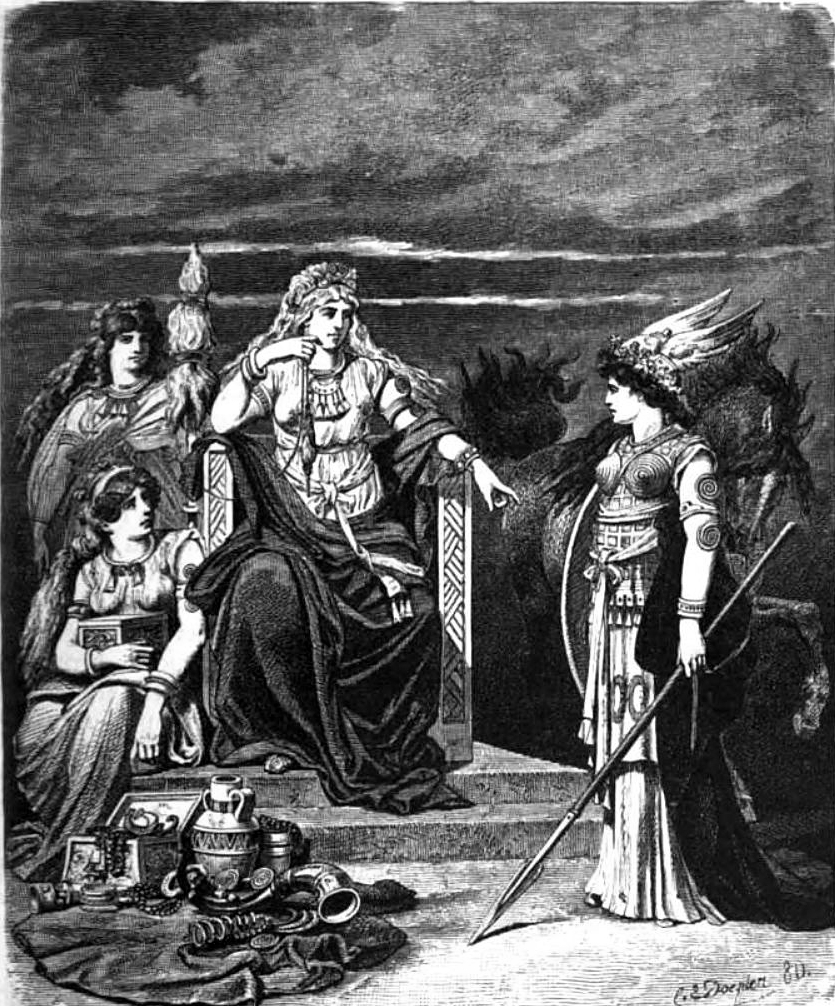
Within the frosty realms of Norse mythology, Frigg takes her place as the Queen of the Aesir. Frigg, the Queen of the Aesir, embodies wisdom, fertility, and the sanctity of home and family. Her essence emphasises nurturing bonds and communal wisdom, integral to familial harmony. Often considered akin to Freya, a goddess of the Vanir tribe, Frigg shared similarities in her characteristics. Both were völvas, skilled in the magical art of seidr, used for divination and shaping the future through ritual. While distinct, they might have emerged from a single deity whose personas diverged over time. Unlike Freya’s known indulgence, Frigg exemplified a more conservative moral code regarding sexuality (not sure how I feel about this duality).
The name “Frigg” derives from Proto-Germanic *frijaz, meaning “beloved, dear.” This association extends to the English day “Friday,” linked to “Frigg’s day” in Old English. Married to Odin, Frigg held a paramount position among the Norse gods. Residing in Fensalir, a watery realm resembling marshlands, Frigg owned an ashen box carried by the goddess Fulla. Its contents remain a mystery. She also possessed falcon plumes utilised by gods like Loki for shapeshifting.
One renowned narrative, the “Death of Baldur,” showcases Frigg as a devoted mother. Distressed by her son’s prophesied death, she sought to protect Baldur from all threats. Unfortunately, Loki exploited her oversight with mistletoe, leading to Baldur’s tragic demise. Despite her efforts, Baldur remained in Hel’s realm. Thökk, refusing to weep for Baldur (revealed to be Loki in disguise), sealed his fate in Hel for eternity, leaving Frigg devastated by her son’s untimely end.
Hel – ruler of the eponymous underworld of Norse Mythology
In the realm of Norse mythology, Hel stands as a formidable figure, often linked to the darker domains of death and judgment. As a key player in Norse eschatology, her responsibility was pivotal—judging the departed and leading the deceased during Ragnarok, the apocalyptic event, aboard a ghastly ship forged from the remnants of the deceased. This imagery, evoking a haunting resonance, reflects a facet of the divine feminine often overlooked—the sovereignty and depth encompassed within the cycles of life and death.

Hel, born of the trickster god Loki, presided over Niflheim, a realm of darkness and transition situated downward and northward. This domain harbored Náströnd, infamous as the shore of corpses, where those guilty of severe transgressions faced torment by serpent venom within a castle while the dragon Nidhogg fed on their essence. Despite her intimidating realm, Hel, distinct from the recognised Norse pantheon, lacked recognition among the gods and wasn’t classified as a goddess in the Eddas, the primary Norse mythological texts.
In her distinctiveness from conventional godly status, Hel emerges as a figure not bound by traditional deity classifications. Her lineage ties her to the jötnar, and her profound role in the afterlife amplifies her significance in the intricate tapestry of Norse mythology, hinting at the intricate layers of power and judgment intrinsic to the divine feminine across the mythological spectrum.
Isis – The Egyptian Mother Goddess
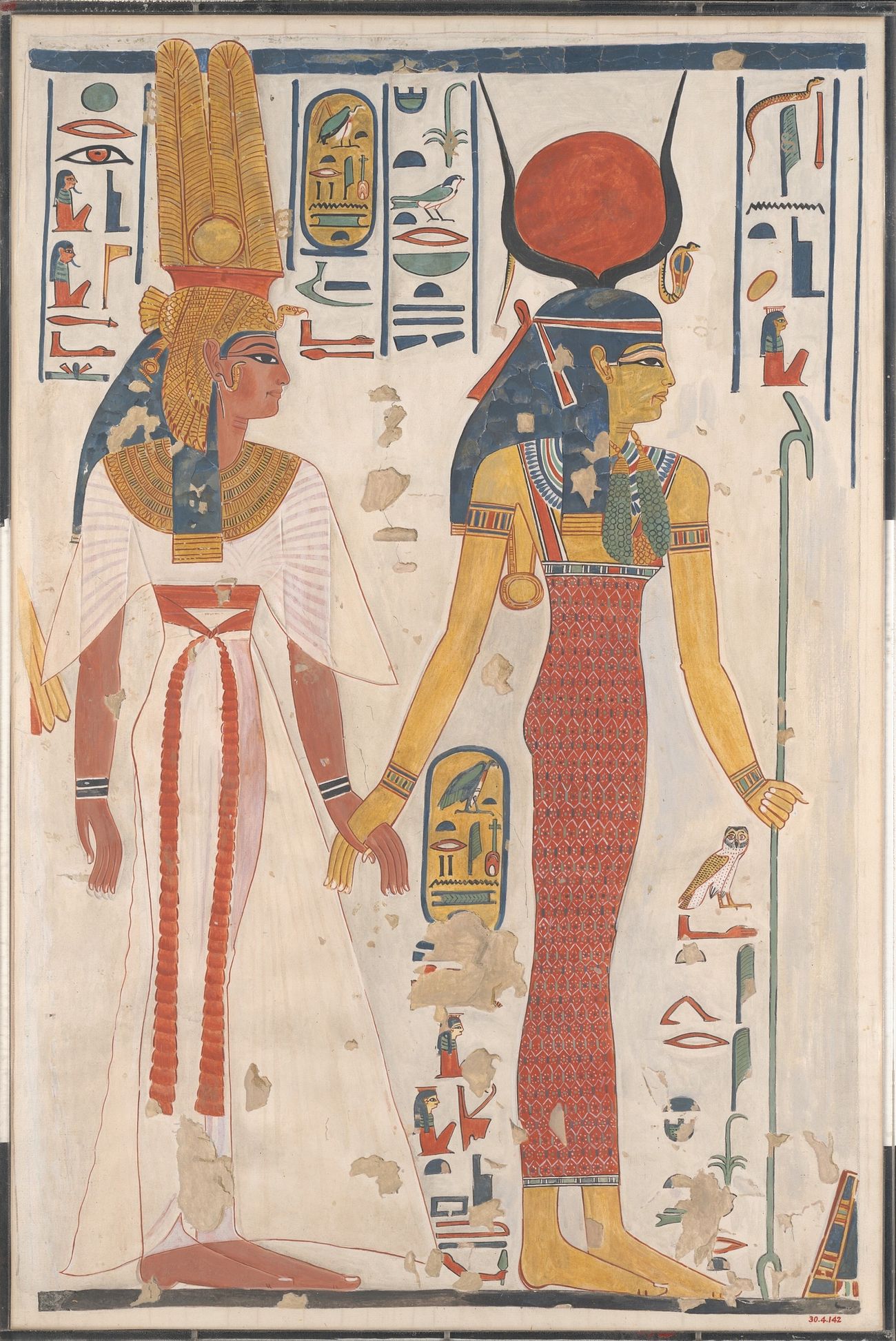
Within the storied sands of ancient Egypt, Isis emerges as the epitome of the Mother Goddess, revered for her embodiment of fertility, motherhood, and magical prowess. As the granddaughter of Ra, wife to Osiris, and mother to Horus, she symbolises the enduring strength of the feminine spirit. Isis was renowned not only as a sorceress and healer but also as an ardent guardian of her kin, fiercely protective of her loved ones.
Her legacy resonates through acts of profound healing and boundless compassion, yet history also paints a portrait of her complexity. While hailed for her nurturing nature, Isis wielded a duality—a balance of ruthlessness when her loved ones were threatened and an unwavering loyalty to her family’s legacy. Her story, steeped in resurrection and rebirth, mirrors the eternal cycles of life, emphasising the enduring power intrinsic to the feminine essence.
Isis, within Egyptian mythology, embodied contrasting facets. Despite her capacity for compassion and healing, her grief could provoke unintended consequences, leading to the demise of innocents. Her actions—extorting her grandfather Ra to ensure her unborn son’s rightful place and intervening in her son Horus’ challenges with Set—reflect a mother’s unwavering devotion, displaying both her love and protective instinct.
In the rich tapestry of Egyptian mythology, the knowledge of someone’s true name was believed to hold immense power. Ra’s true name, a source of authority over the sun god and his might, exemplified this belief in the significance of names and their potent influence.
Ixchel – aged jaguar goddess (Mayan Mythology)
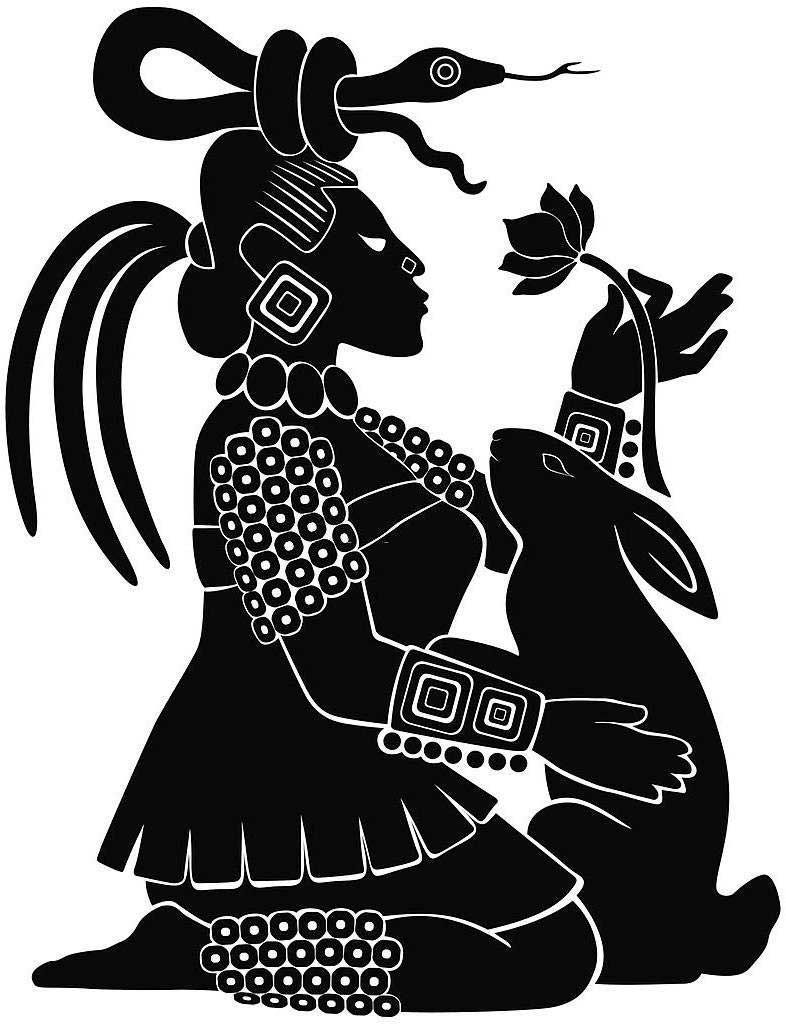
Imagine a title more powerful than ‘the aged jaguar goddess of midwifery’—it’s a challenge! Allow me to introduce Ixchel (or Ix Chel), the revered Mayan goddess of childbirth and war. Often depicted adorned with jaguar claws or ears and donning a serpent headdress, she embodies the essence of the moon and finds association with the traditional Mayan sweatbath. Her significance was so profound among Maya women that they established the Isla de Mujeres, an island sanctuary dedicated to worshiping Ixchel, a homage that endures off the coast of present-day Cancun
Mami Wata (African and African Diaspora Spirituality)
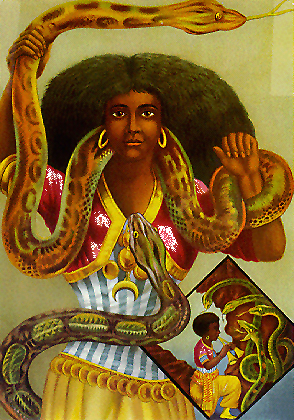
Mami Wata, revered across vast regions of Africa and the Atlantic diaspora, embodies the spirit of water, often assuming the form of a mermaid alongside her serpent companion—a symbol synonymous with divinity. In African lore, Mami Wata exists as both protective and seductive, bearing a tempestuous temperament befitting her watery realm. Her dominion extends to capturing spirits, bestowing wealth, and governing an extensive host of water spirits known as mami watas and papi watas.
The African spiritual tradition of Mami Wata, also referred to as Mother Water, encompasses worship dedicated to a pantheon of water spirits. Most prominently revered among the Efik, Ibibio, Igbo, and Annang peoples of South East Nigeria, the influence of Mami Wata expanded through trade routes, stretching its reach from Senegal to Zambia.
Often depicted with a human upper body and a fish or serpent lower half, Mami Wata symbolises various facets of existence—prosperity, abundance, healing, and the potential for destruction. Adorned with a snake around her neck, she embodies both divinity and the art of divination. Celebrations honoring her presence near or within water involve transformative communal rituals, combining music and dance to transmit histories and memories from the African continent.
The enduring legacy of Mami Wata transcended the brutalities of the Transatlantic slave trade. Infused with elements of Indigenous Caribbean worship, her tradition persevered across the Americas in various manifestations. Particularly poignant is her role as protector of mothers and children—a solemn reminder amid the harrowing separation of families wrought by slavery. Within her worship, a profound sense of unity and fortitude emerged, empowering communities to resist enslavement, honoring women as healers and leaders, and fostering a resilient spirit in the face of adversity.
Mazu (Chinese and South Taiwanese Spirituality)
The Chinese deity Mazu holds a significant place in the country’s cosmology, revered as the patron goddess safeguarding seafarers from the perils of the ocean. Legend tells of her mortal origins as Lin Moniang, born in 960 AD on an island. Clad in a vibrant red dress, she earned reverence by guiding fishing boats safely through treacherous waters, occasionally wielding supernatural abilities. Celebrated for her miraculous deeds in life, she has since been venerated as Mazu or Tin Hau by Chinese and Taiwanese seafaring communities.
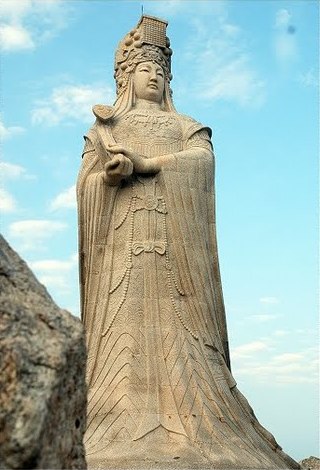
Mazu’s divine sphere extends beyond maritime protection. She is also credited with bestowing fertility and shielding against the dangers posed by pirates. Iconographically, she is often portrayed adorned in her distinctive red attire, a symbol deeply associated with her identity. This deity’s lore and reverence have transcended time, cementing her as an enduring symbol of safety, fertility, and guardianship among those who brave the seas.
Princess Liễu Hạnh (Vietnamese Folk Faith)
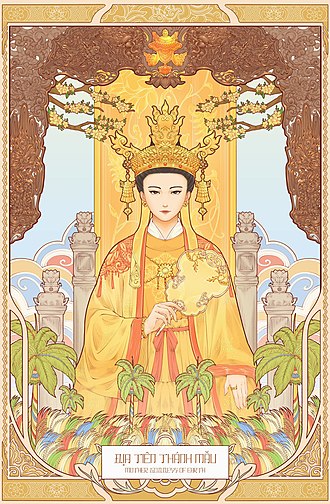
Princess Liễu Hạnh stands as a unique and revered figure in Vietnamese mythology, recognised as one of the Four Immortals, revered divine beings within Vietnam’s Red River Delta. Born as a daughter of the Jade Emperor, a central deity in East Asian theology, her tales transcend time and form the essence of ancient Vietnamese lore.
In multiple incarnations on Earth, Liễu Hạnh experienced mortal love but also displayed a fiercely protective nature, often driving away those who pursued her against her will. Legends recount her response to unwelcome advances, illustrating her agency and strength. Other narratives portray her as a force of retribution, seeking vengeance when her temples faced destruction, inflicting maladies upon those responsible.
Throughout history, interpretations of Liễu Hạnh’s character have varied. An eighteenth-century poetic account, “The Story of the Van Cat Goddess,” depicts her as an icon of female emancipation, a paragon of poetic prowess, and a symbol of feminine power.
The Communist regime’s early years in North Vietnam led to the suppression of Liễu Hạnh’s worship. However, since the 1980s, she has experienced a resurgence in devotion, particularly among female worshippers. Her revival serves as a testament to her enduring significance and her evolving role as a focal point of faith for those who seek empowerment and spiritual connection. The image above showcases a shrine dedicated to Liễu Hạnh in Vietnam, a testament to her enduring influence on Vietnamese culture and spirituality.
Saraswati
Hinduism embodies wisdom through two significant deities. Saraswati, the consort of Brahma, a member of the Tridevi, is revered as the Hindu Goddess of Knowledge, Music, Arts, Speech, and Learning. Another figure associated with wisdom is Ganesha, the renowned “elephant-headed” god, also recognised as Buddhipriya, denoting a fondness for intelligence and wisdom. Originally personified as the Saraswati River in the Vedas, Saraswati evolved in later texts, becoming synonymous with speech and the intellectual depth that empowers it. Regarded as the consort of Brahma, she’s hailed as the inventor of Sanskrit and is celebrated as the “mother of the Vedas” within the Mahabharata.
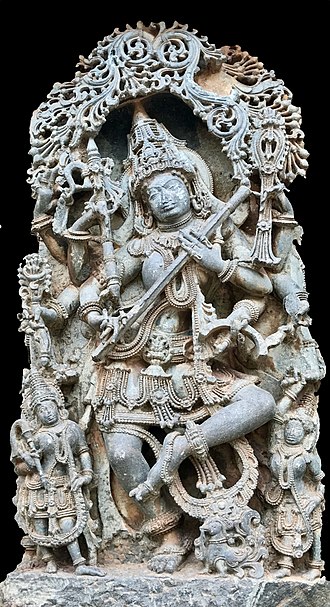
Depicted iconically, Saraswati appears as a beautiful woman draped in a splendid saree, often seated on a white lotus and accompanied by a swan or peacock. Typically depicted with four arms, she holds symbolic objects representing speech, learning, and culture. These include a book symbolising knowledge and the Vedas, and a water pot denoting spiritual purity and the sciences. Additionally, she is portrayed playing the Venna, symbolising her patronage of the arts, particularly the South Asian stringed instrument representing harmony through knowledge.
References to Saraswati and the Veena abound in Hindu texts like the Vedas and Mahabharata, with the instrument being considered sacred and representing the wisdom of sages. In contemporary contexts, a version of the Veena is aptly named the Saraswati Veena. In Japan, Saraswati is known as Benzaiten and is part of the Seven Lucky Gods. As Benzaiten, she embodies eloquence, speech, learning, and patronage of the arts.
Tiamat (Babylonian Mythology)
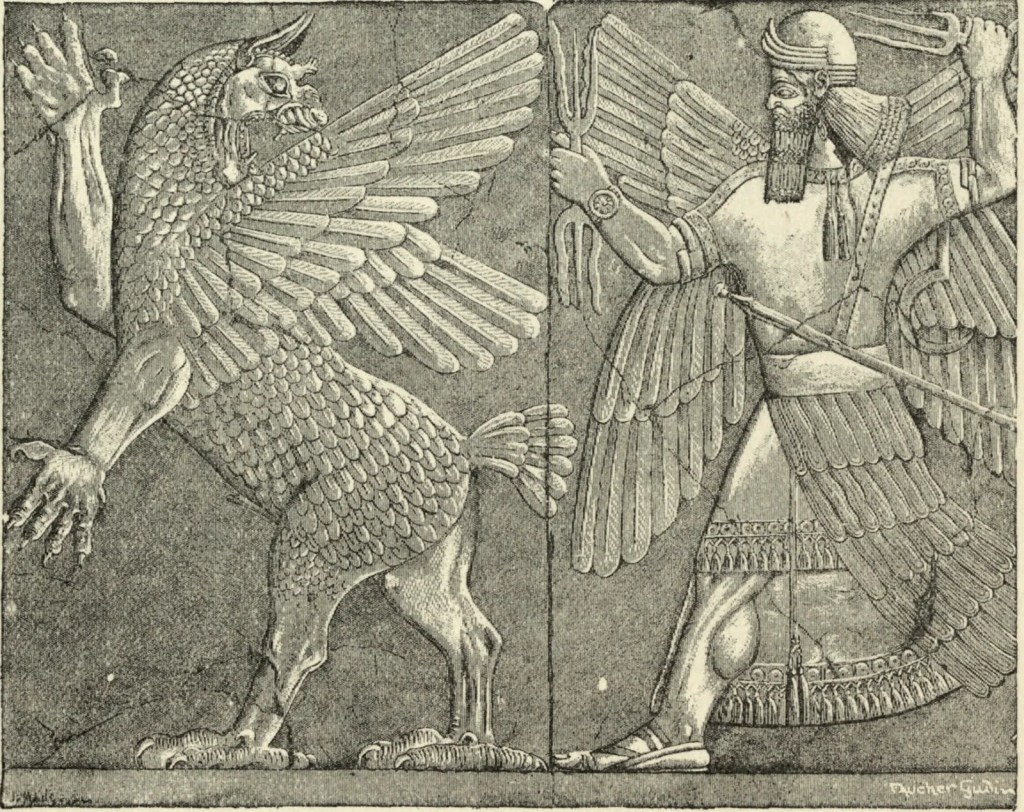
Tiamat, the Babylonian primeval goddess, embodies a tragic tale steeped in ancient Babylonian mythos. The Enuma Elish, the Babylonian creation epic, narrates Tiamat’s pivotal role as the mother of the gods of Babylon and a co-creator of the world alongside her consort, Apsu, the primeval Babylonian god of freshwater. However, the tranquil alliance shattered when Apsu, perturbed by the gods’ clamor, sought to annihilate them, meeting his demise instead.
In retaliation, a wrathful Tiamat called forth an army of demons to confront the gods, resulting in her own destruction. Even in her demise, Tiamat remained unparalleled: Marduk, newly anointed as the king of the Babylonian pantheon, cleaved her lifeless form in two, fashioning the dome of the sky and the waters of the earth.
It’s noteworthy that Tiamat, often depicted as a feathered dragon and known by the title “chaos monster,” exemplifies the complex nuances of divine femininity within ancient mythologies. Her story encapsulates both creation and destruction, highlighting the immense power and indomitable nature often attributed to primal goddesses like her in ancient narratives.
Cultural Significance and Universality
These goddesses are not mere figures of ancient myths; they are symbols of the divine feminine that transcend time and culture. Their stories offer wisdom and insight into the diverse facets of femininity, revealing that the divine feminine transcends cultural boundaries.
As we explore these myths, we gain a deeper appreciation for the interconnectedness of human spirituality. Each goddess brings her unique attributes and cultural significance, yet together, they weave a tapestry celebrating the many facets of the divine feminine.
In our journey through these myths, we find a deeper connection to the universal essence of femininity that unites us all, regardless of culture or creed. The divine feminine is a testament to the enduring power, wisdom, and grace of the feminine spirit that resides within each of us, transcending time, borders, and beliefs.
Resources
Goddesses in World Mythology – by Martha Ann Imel , Dorothy Myers Imel and, Martha Ann
Encyclopædia Britannica, inc. (n.d.). Athena. Encyclopædia Britannica. Retrieved July 25, 2022, from https://www.britannica.com/topic/Athena-Greek-mythology
March, J. R. (2022). Athene. In Dictionary of classical mythology (pp. 88–91). essay, Oxbow Books. ISBN: 9781782976363.
Cartwright, M. (2015, November 25). Saraswati. World History Encyclopedia. Retrieved from https://www.worldhistory.org/Sarasvati/
Anath | Canaanite Goddess, Goddess of War, Fertility & Love | Britannica
The Myth of Whiteness in Classical Sculpture | The New Yorker
Modern Mythology: Whiteness in Classical Antiquity – The Texas Orator
Mythology Expert Reviews Greek & Roman Mythology in Movies (Part 1) | Vanity Fair
Whitewashing Antiquity – Confluence (nyu.edu)
Charmaine Nelson, The Color of Stone: Sculpting the Black Female Subject in Nineteenth-Century America (Minneapolis: University of Minnesota Press, 2007).
Denise Eileen McCoskey, Race: Antiquity and Its Legacy (London and New York: Oxford University Press, 2012.
Tim Whitmarsh, “When Homer Envisioned Achilles, Did He See a Black Man?” Aeon
LaRocca-Pitts, Beth. “Anath: Bible.” Shalvi/Hyman Encyclopedia of Jewish Women. 31 December 1999. Jewish Women’s Archive. (Viewed on December 6, 2023)
The Rape of Medusa in the temple of Athena: aspects of triangulation in the girl

 Legally Zen