
The Divine Feminine, a force that transcends time and culture, has long inspired artists to capture its essence in various creative forms. Although I would certainly not claim to be any sort of Art Historian, depictions of the Divine Feminine have acted as pillar on inspiration throughout my practice. From paintings to sculptures, music to literature, I will delve into how artists across different mediums have depicted and honoured this profound concept throughout history.
The Divine Feminine in Paintings

Throughout the annals of art history, countless painters have sought to portray the Divine Feminine in all her facets. From Botticelli’s “The Birth of Venus,” which epitomizes feminine beauty and sensuality, to Frida Kahlo’s self-portraits that radiate strength and vulnerability, these works reflect the multifaceted nature of the feminine spirit. In these depictions, there is often “a subtle message about the greatness, life, or struggle of women”.
The potential of the female body to nurture and give life has historically fostered a spiritual association between feminine agency and the generative powers of creation. In many creation narratives, feminine and masculine forces are intertwined, either as a divine couple or united in a single bi-gendered being capable of conceiving existence.
I was fortunate enough to attend a gallery exhibition of Judy Chicago’s work before the pandemic, which featured “The Creation.” In this piece, Chicago explored the racialisation and gendering of God.
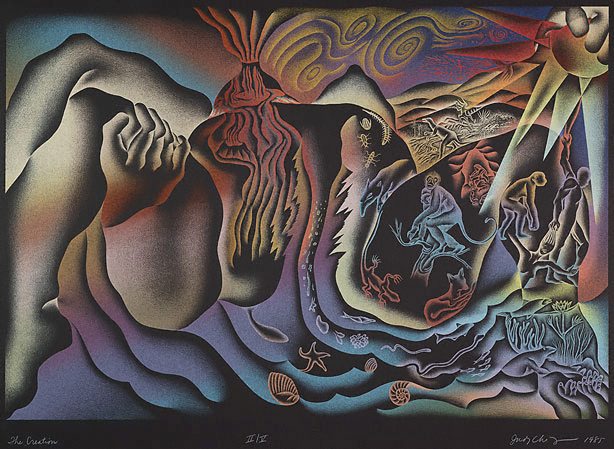
Using needlework—an art form traditionally associated with female labour—”The Creation” depicts a female deity in a birthing position (aka legs akimbo), with primordial life flowing from her vulva. This faceless figure is surrounded by male figures engaged in acts of violence, dragging a female figure by her hair. Meanwhile, a male figure has opportunity to grasp for the sun, while the deity lies , her breasts erupting like volcanoes.
Sculptures that Evoke the Divine Feminine
Sculptors have intricately chiseled their visions of the divine feminine into stone, wood, and bronze. Michelangelo’s “Pietà” poignantly captures the grief and compassion of the Virgin Mary, while ancient sculptures like the Venus of Willendorf symbolize fertility and abundance, representing the Earth and all that nurtures and sustains life. Many cultures have long revered the Earth as a “Mother,” embodying the nurturing qualities associated with femininity.
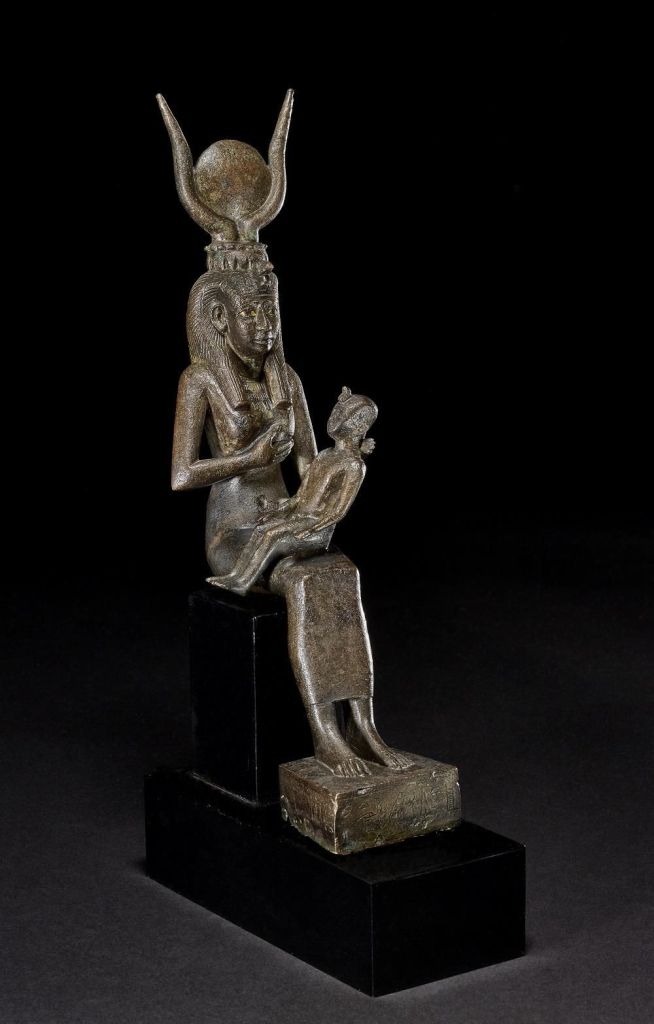
One of my favorites is the bronze figure of Isis (Egypt, 400–300 BC), depicted with her young son Horus on her lap. In this sculpture, Isis holds her left breast towards her baby as he gazes off into the distance. Her regal posture contrasts with the weariness etched on her face, illustrating the challenges of motherhood. Meanwhile, Horus appears captivated by the world around him.
This representation of ‘real’ parenthood stands in stark contrast to the often romanticised view of breastfeeding and motherhood as effortlessly natural. It serves as a humbling reminder of the universal struggles faced by mothers. Even a goddess as powerful as Isis—who traversed Egypt to collect the scattered pieces of her husband Osiris—grapples with the same hardships that any new mother experiences. This duality of strength and vulnerability enriches our understanding of the divine feminine and its complexities.
Music that Sings Her Praises
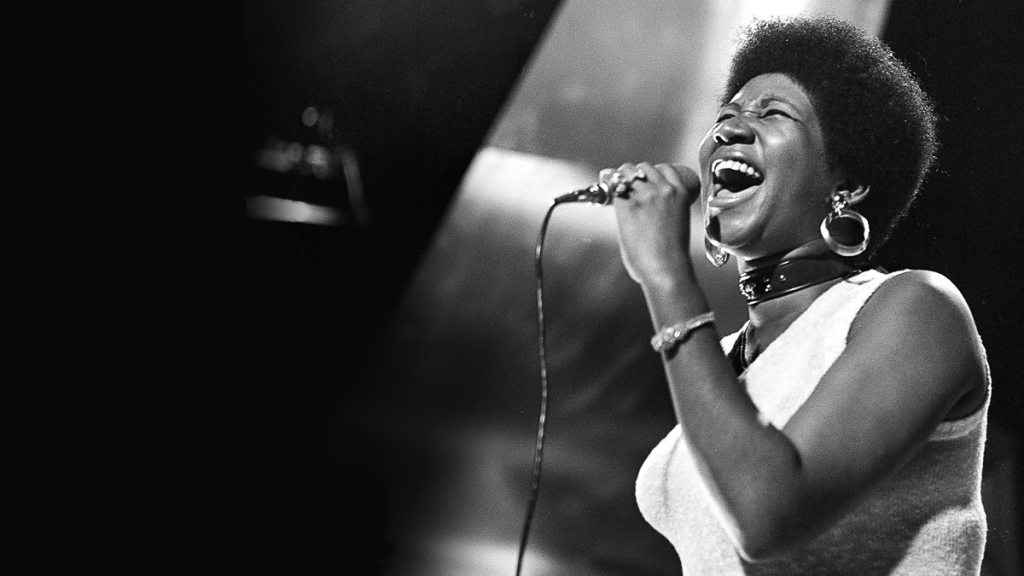
Music serves as a potent medium for expressing the Divine Feminine. From the ethereal beauty of “Ave Maria” to the empowering anthems of Beyoncé and Aretha Franklin, music encapsulates the full spectrum of feminine experience.
For many, music is a tool for connecting with the Divine. It can evoke personal power, inspire creativity, and provide solace. The ability to harness the energy of a song can be transformative, allowing individuals to tap into their inner strength and wisdom.
Music plays a great part of my practice, allowing me to evoke and tune into the messages from the goddess. For me, the exploration of my femininity and sexuality is a co-creative relationship with the universe and therefore, my craft. My deep connection with music can – with the right song – allow me to gather my personal power and use it to serve the universe as I wish to do. I am currently cultivating a playlist should you wish to use it – whether it is for a ceremonial bath or before you smash a job interview – I hope it helps you to draw upon your strength.
Literary Explorations
Literature offers another realm for exploring the Divine Feminine. Writers like Virginia Woolf and poets like Rumi have delved into the complexities of female experience and the spiritual dimensions of femininity.
- A Room of One’s Own by Virginia Woolf is a seminal work that explores the challenges faced by women writers and the importance of independent spaces for creativity.
- Women Who Run with the Wolves by Clarissa Pinkola Estés celebrates the wild woman archetype, drawing on folklore and mythology to explore women’s instincts and intuition.
- The Spiral Dance by Starhawk is a foundational text in modern Paganism, exploring the Goddess tradition and its relevance to contemporary life.
- Sister Outsider by Audre Lorde is a collection of essays that examines the experiences of Black, lesbian, and feminist women, offering powerful insights into intersectionality.
- Braiding Sweetgrass by Robin Wall Kimmerer explores the interconnectedness of humans and nature through the lens of Indigenous wisdom.
Rosaleen Norton: An Artist in Her Own Right
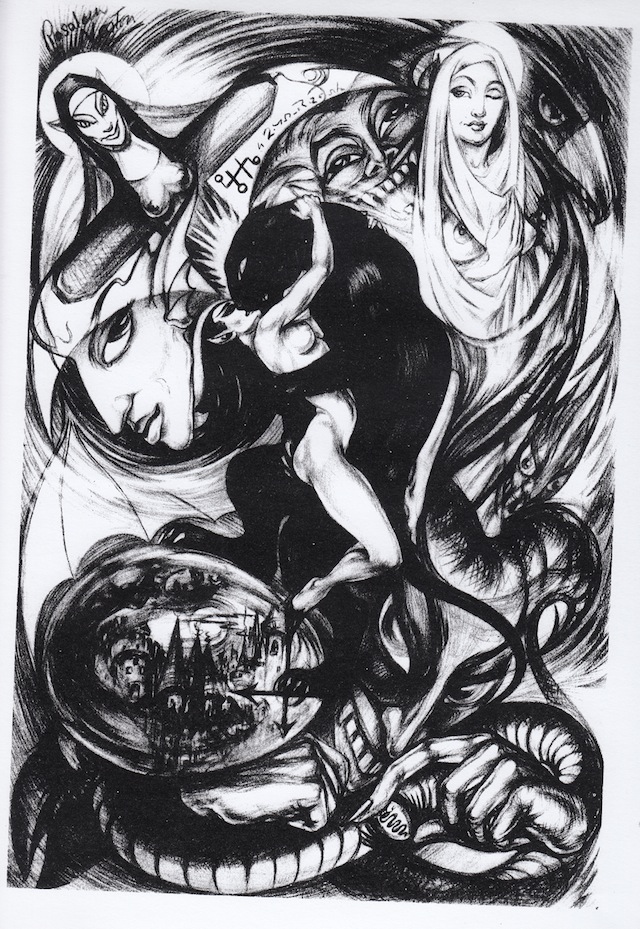
Finally, as a practicing witch, one standout artist who deserves special mention is Rosaleen Norton. Rosaleen Norton, often referred to as the “Witch of Kings Cross,” was an Australian artist whose work defied societal norms. Her paintings and drawings delved into the mystical and erotic, challenging conventional representations of the Divine Feminine.
Norton’s fearless exploration of taboo subjects is a testament to the power of art to push boundaries and provoke thought. As she once said, “obscenity like beauty is in the eye of the beholder.”
Norton’s fearless exploration of the divine feminine through her art serves as a testament to the boundless possibilities of creative expression. Symbolism is at the heart of magic, and art that creates an emotion, whatever that may be, is magic in action. Like the song that moves you to tears of joy or sadness, good magical art is evidence of the power of magic, and Rosaleen’s art most certainly instils emotion in the viewer.

And if you haven’t watched, The Witch of King’s Cross on Amazon Prime then I would definitely recommend it!
The Ever-Present Inspiration
The Divine Feminine is a timeless concept that continues to inspire and challenge artists across disciplines. From the ethereal to the earthly, from the sacred to the profane, these works offer diverse perspectives on femininity, spirituality, and the human experience. By engaging with these artistic expressions, we can deepen our understanding of the Divine Feminine and its enduring power in our lives.
Resources
Creation narratives and Feminine power By Lucy Dahlsen, Project Curator: Feminine power
A pagan perspective on Feminine power: the divine to the demonic

 Legally Zen